Polymarket: A Step-by-Step Guide for Beginners and Tips to Avoid Mistakes


Why Trust Web3Bet
Our team of experts has independently reviewed and evaluated all the products and services featured on this page to ensure you receive accurate and reliable information
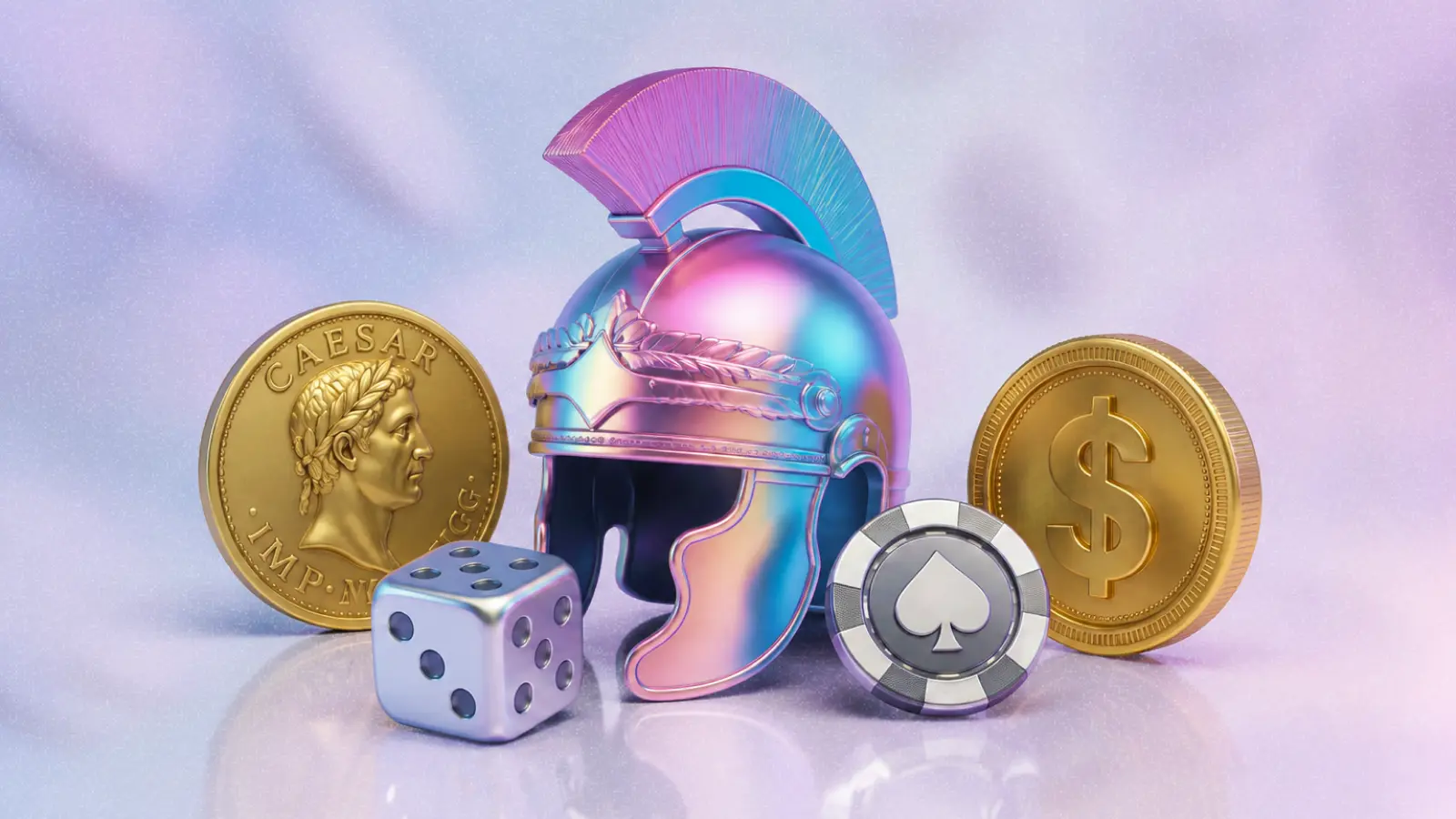
Long before the advent of statistical models, humans were able to “price” the future in monetary terms, betting on events. In ancient Rome, it was almost like an extension of urban life, with hordes of people pouring into chariot racing events and betting on the outcome of a heat or a gladiatorial fight.
It’s easy to see that same concept, where people were essentially betting on probabilities and trying to gain an advantage from that, with the series “Those About to Die.” One can almost imagine what a “Polymarket Before The Internet” would look like – loud, chaotic, and fueled by insider information and emotion.
The basic premise remains the same – it has simply been repackaged within technology. Forecasting was taken online, and “betting” has evolved into a form of trading probabilities, extending from sports into politics, economics, and of course, cryptocurrency. In this piece, we will break down one of the most popular discussion topics in the prediction markets world: Polymarket. Specifically, how it works and how people make money from it — more on that below…
What is Polymarket?
Polymarket is a decentralized prediction markets platform on the Polygon blockchain that lets you trade on the world’s most talked-about topics (such as politics, sports, crypto, and current events). On Polymarket, you build a portfolio based on your forecasts and profit if you’re right — and lose money if your prediction is wrong.
Polymarket isn’t an online casino, as many might assume. It’s a financial platform where those who can analyze the market faster, stay on top of the news, and understand how a given event is likely to be resolved come out ahead. In practice, it’s trading in the form of forecasts, where users trade directly against one another. Here, what you’re trading is the outcome of an event that hasn’t happened yet.
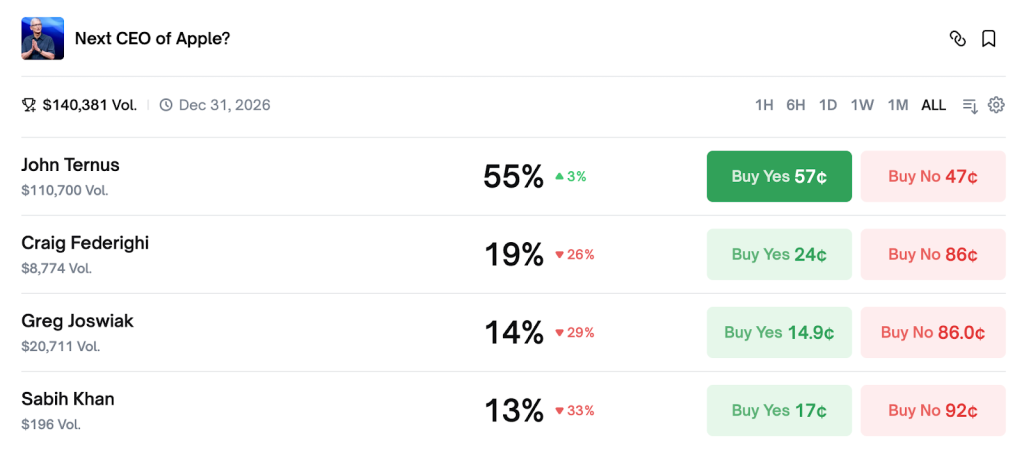
Lots can also be “multi-level” – you can bet on several persons at once within one event.
The key difference between Polymarket and traditional sportsbooks is that uncertainty is always part of the equation — but it’s not randomness for its own sake. Instead, it’s the market pricing expectations in real time. You can also close your position before the event is decided via an open order book, so you don’t have to wait for final settlement to get your funds back. In effect, the platform works like an exchange: each event is represented by two shares —“Yes” and “No” — whose prices move based on how participants assess the probability of each outcome.
How does Polymarket work?
At its core, Polymarket runs on a simple binary structure: each event market is framed as a question that can only be answered with “Yes” or “No.” Each market represents a clear, verifiable question, such as:
- Will a specific team win the match?
- Will Ethereum trade above $4,000 by the end of the year?
For every such question, the platform issues two sets of “shares” — “Yes” and “No.” Their prices range from $0 to $1 and reflect the market’s collective assessment of the outcome. For example, a “Yes” price of $0.72 implies that traders are pricing the probability of the event at roughly 72%.
In practice, the mechanics boil down to this:
- A trader buys “Yes” or “No” shares based on their view.
- They hold the shares for a period of time.
- They sell for a profit — or realize a loss.
Note: probabilities on Polymarket are not guarantees and not “inside information” — they’re simply the market’s assessment at a given moment in time.
How to properly understand Polymarket markets
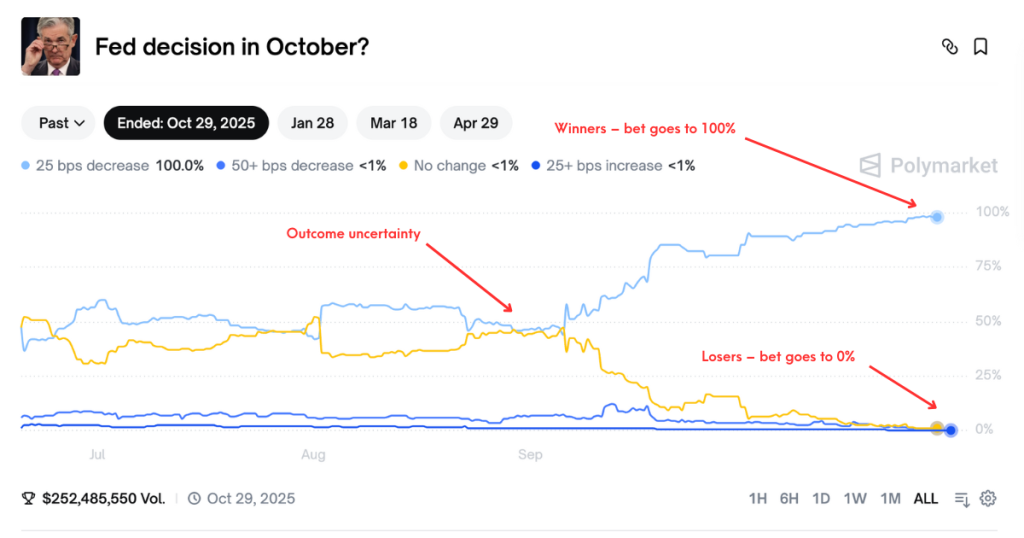
Polymarket prediction flow.
1. Pay attention to the timeframe — and to what actually counts
For the Fed market, the above-referenced chart pertains to, the “event” has a very specific definition. As for what you are actually trading on, not being “something happens,” let’s elaborate: are you not actually trading outcome buckets that are defined by the magnitude change — 25 bp decrease, 50+ decrease, etc. — versus the actual outcome that will be credited, depending on the specific decisions that are made.
Settlement for this contract references a specific metric, with the result being based on the change in the upper bound of the target Federal Funds rate relative to the rate prior to the Fed’s October 2025 FOMC meeting. In the absence of any official press announcement by the time of the following scheduled meeting, the contract defaults to the result of “No change.”
2. The resolution source is almost half of the market
Polymarket almost always indicates what it’s using to settle — official sources, a consensus of credible reporting, and occasionally on-chain or an organization’s announcement. This can make a huge difference, especially for the crypto markets, where the situation ends up being on-chain or the issuer’s announcement. There are always several sources to look at. When the result becomes disputed, it goes to arbitration via the *UMA infrastructure.
3. Volume shows where real trading is happening
High volume usually means more participants and more active repricing as news breaks. That’s why it’s often easiest to start with the most “liquid” markets: they make it clearer how the crowd re-evaluates probabilities in real time.
*UMA — Polymarket’s documentation notes that any user can dispute a proposed market resolution within the challenge window (for example, two hours) through UMA by posting a challenge bond. If the dispute is upheld, the question is escalated to the UMA DVM (Data Verification Mechanism), where UMA token holders vote on the correct outcome — and that vote serves as the backstop for the final resolution.
How Polymarket determines an event’s outcome
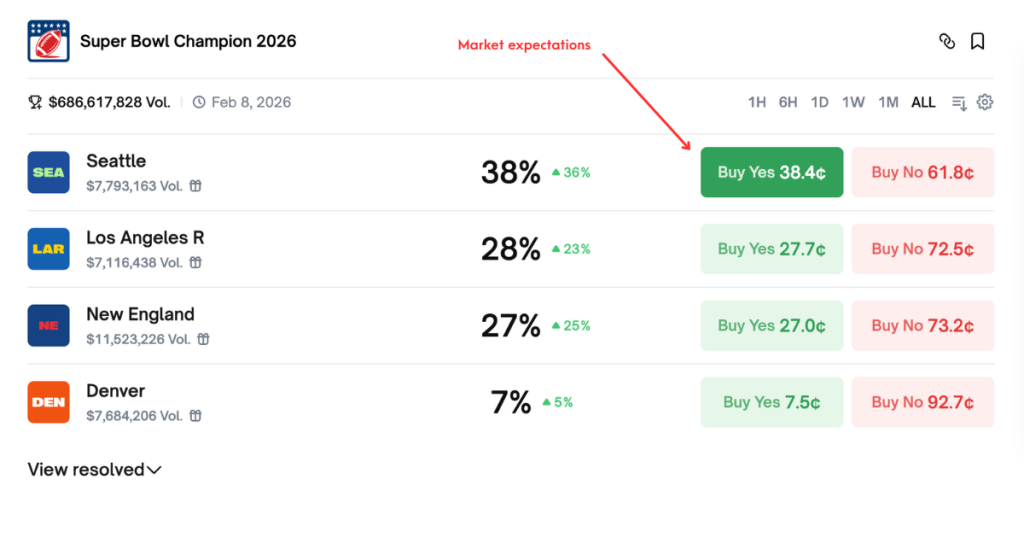
The market has the highest expectations for this team.
The basic question that any prediction market asks is: what defines a correct outcome? For Polymarket, the answer isn’t any single person or the admins; it’s the oracle. What that does is bring real-world information on-chain, such as “election results,” “market indicators,” “weather,” etc.
Once such an event concludes, e.g., after the actual publication of official results regarding an electoral process, such information is communicated to it via a system referred to as the oracle. The protocol employed in Polymarket involves UMA (Universal Market Access). The operational process of UMA is quite simple.
Additionally, if the majority confirms a particular result, such as “Candidate X Won,” it settles the smart contract and makes the necessary payouts. That is, instead of one individual determining that outcome, the market outcome is automatically determined on the basis of individual data verification and overall verification.
That is, the possibility of tampering is removed, so that an error does not arise.
Why is Polymarket so attractive?
If you find that conventional stock and crypto quotes are starting to get too repetitive, then Polymarket will allow you to prove yourself not only as an analyst but also as someone capable of navigating many different subjects from something such as “Will the US government confirm meetings with a UFO?” right up to something such as “Who will win at the 2026 Oscars?”
Meanwhile, at the same time, skills that one would take for granted in experienced traders would also be needed, such as having the capacity to evaluate risk, be able to react to information, and having in one’s mind a set of core elements that would influence overall sentiment.
High-Risk Diversification
Polymarket can be the most unusual piece of an investment portfolio: “The majority of investors’ assets will remain in conventional investment vehicles such as stocks, bonds, crypto, and ETF’s, and then a small percentage will be used for prediction markets as a separate class of ‘speculative wallet’.”
However, it’s also vital not to romanticise this format. It’s the high-risk zone. You can easily end up losing money quickly if you’re allocating even a small percentage of your portfolio to this kind of activity.
Return potential with correct prediction
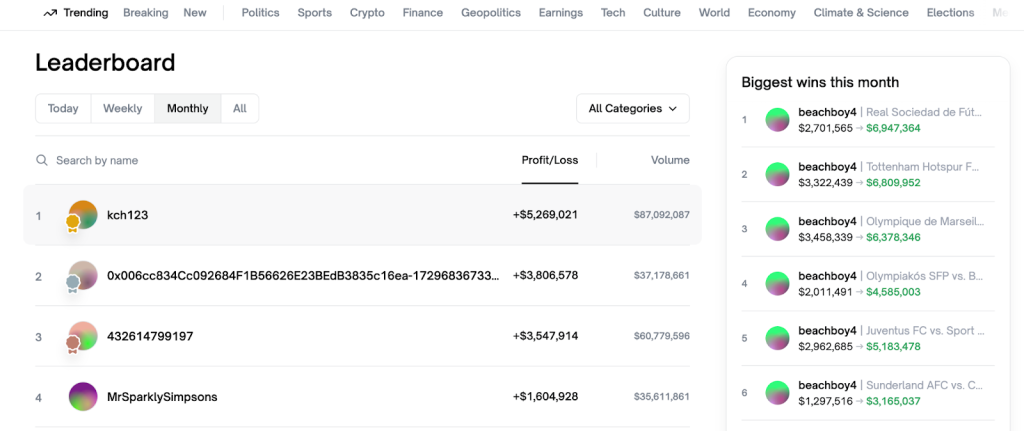
Polymarket also has a leaderboard section. Some traders’ profits are hard to dismiss as mere luck—unless you assume they have access to insider information.
If you’re plugged into the news cycle and understand how the market “digests” headlines, Polymarket can, in certain situations, deliver returns that outpace traditional instruments — simply because you’re buying a probability cheap and selling it higher (or holding through resolution and getting paid out at the end).
And you don’t have to wait for the outcome. You can exit early once the odds move in your favor. The upside is usually smaller, but so are the tail risks—like a last-minute headline that flips the market.
Real-time market sentiment
Each market comes with a live Yes/No price chart, which effectively visualizes the crowd’s collective probability estimate. When the Yes price drops, it typically signals fading confidence; when it rises, it suggests the market is converging on that outcome.
Because traders react instantly, these markets can sometimes reflect shifts in expectations faster than the headlines do: the price moves first, and the “why” gets written afterward.
In political and geopolitical categories, Polymarket becomes a kind of dashboard for global expectations: elections, negotiations, escalation risk, and major regulator decisions. It’s useful not only for trading but also for understanding how the crowd is pricing scenarios in real-time.
Fast dopamine (and why it’s risky)
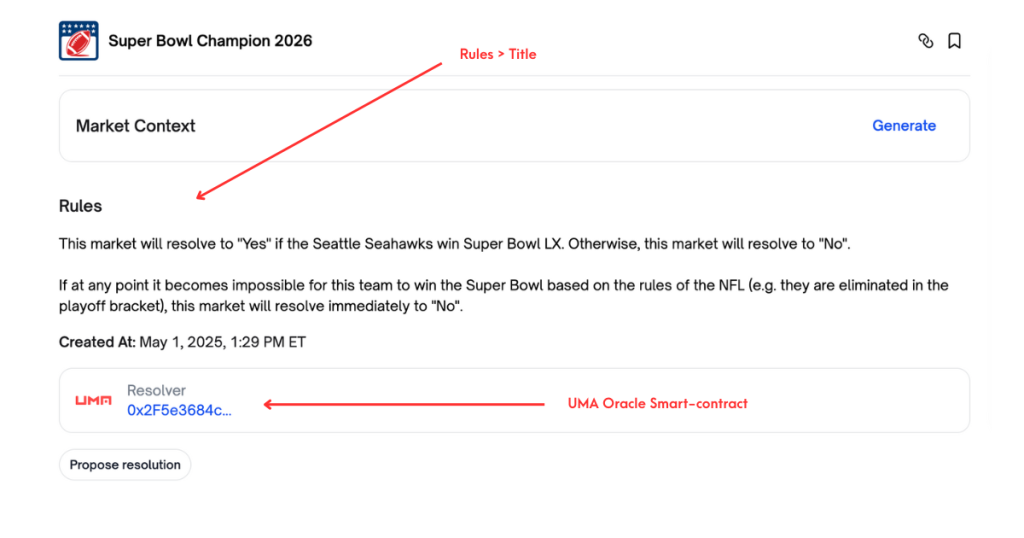
The resolution source is part of the bet.
Polymarket taps into the same excitement loop: you place a trade, refresh the chart, see the price tick, and get an immediate emotional payoff. For many casual users, that quick feedback becomes the main reason to come back again and again.
That’s why the only sustainable approach is the same as in any high-risk speculation: preset limits, a cool head, a defined entry/exit plan — and treating it as a game of probabilities, not a “quick money button.”
Beyond the “fast dopamine” effect, there are a few practical risks worth flagging. Smaller, niche markets can be illiquid, which means wider spreads, slippage, and the possibility that you won’t be able to exit at a fair price when the narrative shifts.
There’s also resolution risk: even with written rules, outcomes can become disputed or ambiguous, and the process may take longer than expected.
Finally, a market price is not “truth” or a guarantee — it’s simply the crowd’s probabilistic estimate at a given moment, and it can be wrong or temporarily distorted by positioning, low liquidity, or headline-driven overreactions.
Conclusion
“No secret knowledge, just no such thing as secret knowledge in Polymarket. Just a high-risk situation involving probabilistic trading based upon crowd emotions rather than crowd knowledge. Small markets, possibly not very liquid (many price spreads, slippage, etc.), and findings that perhaps may not come in the order you’d expect or in as timely a fashion as you’d expect.”
Most importantly, it’s not for the masses. One can only flourish there if he or she remains cool-headed, monitors and checks the news constantly, and can act on the news. Otherwise, the hype would far outshine any decisions made and could lead to huge losses.