Not all casinos have their native cryptocurrency. What is the relevance of this issue? Casinos make a profit, and for them, it would be good to have a personal coin, with users receiving payments through staking and other means.
So, with a crypto casino and its native cryptocurrency, you get a complex financial system where gaming, storage, and staking interact. This way, it becomes possible to establish connections between the platform and its users without banks’ participation, something a conventional casino cannot do.
On the other hand, such a system poses risks: there are projects that create fraudulent tokens that become liquid, lose value, and there are projects that artificially increase the number of coins to pay bonuses, i.e., rewarding users with the stake.
This article focuses on crypto casinos, their native tokens, their purposes, ways to earn, and whether the tokenomics make any sense.
What Makes a Native Token Actually Valuable
What makes a native token worth its salt for both the end-user and platform owner?
The value of a native casino token lies in one of the following factors:
Staking: A percentage of the platform’s total profits goes to token holders, creating a link between the platform’s success and the token’s price. The platform gains increased liquidity, while users earn based on how much they stake; everyone wins.
Deflationary model: Some tokens are permanently burned as the platform generates revenue. As a result, there will be fewer of them available in the future.
Practical use: The token grants access to benefits, such as better rakeback terms, unique games, and low fees, all of which are useful.
DAO governance: Token holders may make decisions about the platform’s operations, gaining a say almost equal to that of a stake. This is particularly applicable to certain platforms that operate as DAOs.
In essence, if a token doesn’t possess any of these qualities but is mainly used to attract more funds in deposits and as a marketing tool, it cannot claim any value storage.
1. Rollbit: RLB Token
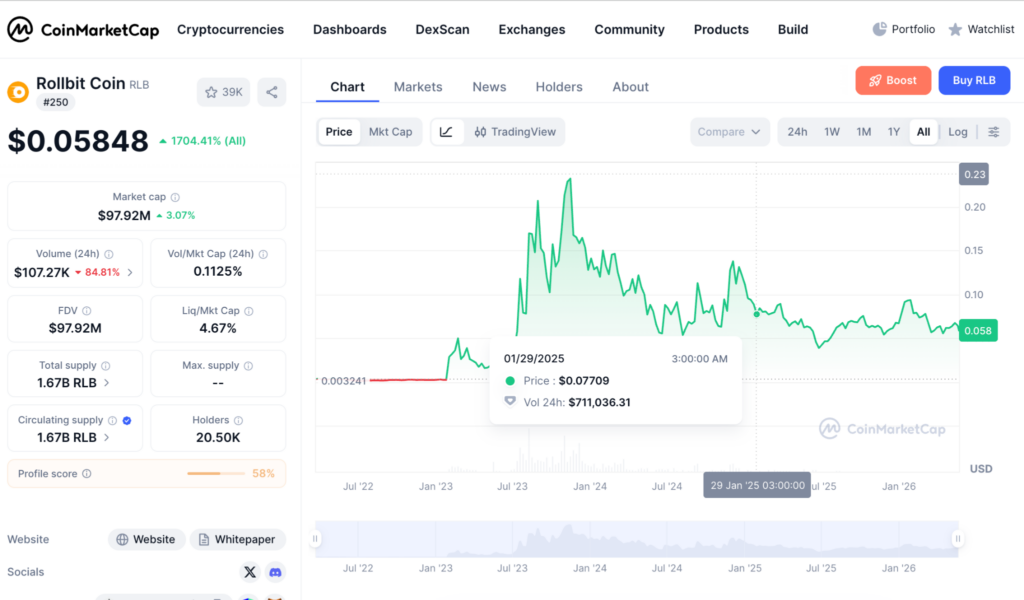
RLB is the casino token of the much-talked-about Rollbit, and it’s no wonder it’s one of the most discussed casino tokens in crypto communities, thanks to its very interesting mechanics.
Rollbit uses 10% of its sports betting profits and a portion of the casino rake to buy back RLB tokens on the market and permanently burn them. This creates a direct link between the platform’s revenue and token scarcity: the higher the trading volume, the more tokens are burned.
Staking rewards: RLB holders who stake also receive a percentage of the buyback and burn amount as a staking reward. The reward size depends on the platform’s trading volume; when Rollbit is active, staking yields are higher.
Furthermore, storing and staking RLB increases your rakeback percentage on the platform. The more RLB you hold, the higher your cashback on losses.
Overall, RLB performed well during bull markets and peaks in casino trading volume. The only risk is that the model only works with high trading volume on the platform. A bear market, which reduces gambling volume, simultaneously reduces both token buybacks and staking returns.
The token itself can be assessed as trading steadily flat. Whether to buy it or not is up to you.
2. BC.Game BCD (BC Dollar)
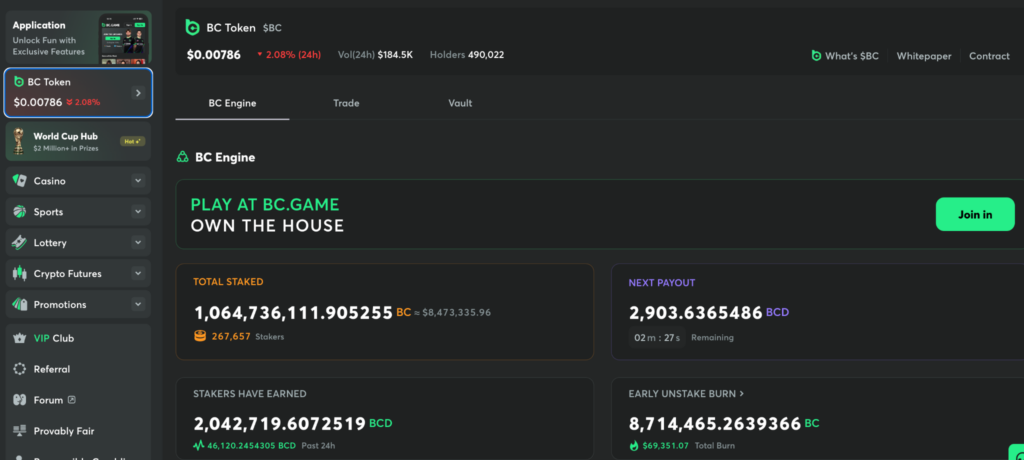
Although RLB focuses on buybacks and burns, BCD operates on a different logic. This is not a token trying to become a “financial model” of some sort; rather, its main advantage is that it is part of the BC.Game platform itself.
In addition, BCD may be obtained through engaging with platform activities: playing games, completing quests, attending events, and so on. Also, it may be bought outright, as it is an internal currency of the BC.Game universe helps to keep users within its borders.
Moreover, it offers staking options; one may stake BCD for 30 days or up to a year and earn rewards in the same token. The longer it stays staked, the better the reward.
In real life, BCD may be used for deposits, exchanges for other crypto assets, participation in BCD games, and purchases from the VIP store, which offers bonuses and privileges. In short, it is not only a crypto asset but a functional tool for use on the platform.
However, there is one drawback regarding BCD: its value depends entirely on how actively users use BC.Game. Unlike RLB, there is no systematic mechanism for buybacks and burn that would ensure a shortage. This is why the token does not seem good for long-term keeping. As you see, the rate looks quite pessimistic.
3. Shuffle: SHFL Token
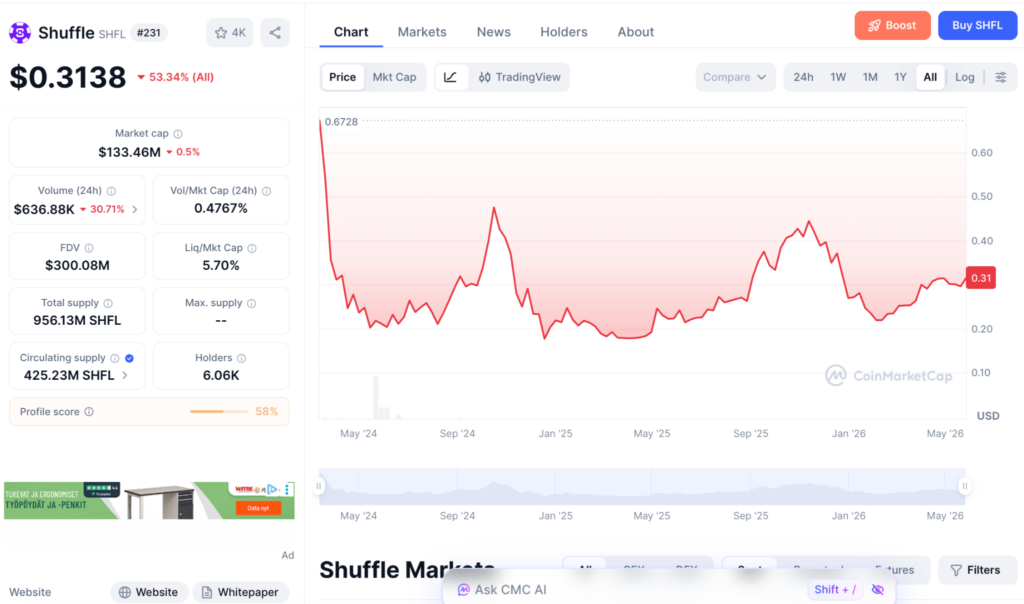
Shuffle is probably one of the newer platforms out there at the moment. The developers created a token identical to all their competitors, with similar tokenomics: a portion of the platform’s profits is given to SHFL stakers, with clear rates and on-chain distribution every day.
As with other projects, the critical benefit of staking SHFL is the absence of lockup periods, allowing users to withdraw their tokens at any time and avoid being trapped in a sudden market downturn.
In terms of usage, it is the same as with other gambling platforms since SHFL holders get enhanced rakeback, special discounts, and fast VIP-level upgrades. It means that this token is good not only for speculative trading but also for actual play.
The biggest downside of this platform is the same as with any other, since everything relies on Shuffle.
4. Betfury: BFG Token
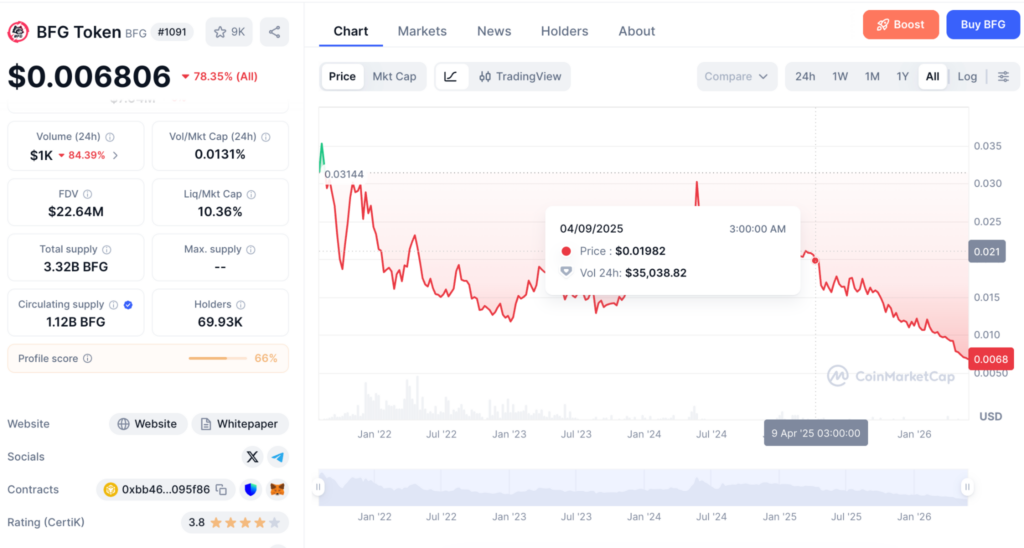
The staking of BFG has become rather profitable for users over time: during periods of maximum liquidity, annual returns reached hundreds of percent because a considerable portion of the platform’s rake went directly into users’ pockets. This is quite logical: the more spins are made on Betfury, the more the staker will get. All turns yield profit.
A nice staking system has been developed by their team: there are no locks on the tokens (this is essential), there are daily payments, and, importantly, it is not about BFG. The payouts for staking come in BTC, ETH, TRX, USDT, and other tokens, thus at least partly solving the notorious problem of staking paid in the token which receives its value from such payments. Furthermore, there is an element of mining here: the player earns BFG tokens while gambling.
The risk comes from infrastructure built on top of Tron, adding another layer of risk for smart contracts. Speaking of the project’s development, the BFG coin still looks quite promising given the existing connection between casino volume and participants’ profits. But it definitely needs to be taken into account.
5. TG.Casino: TGC Token
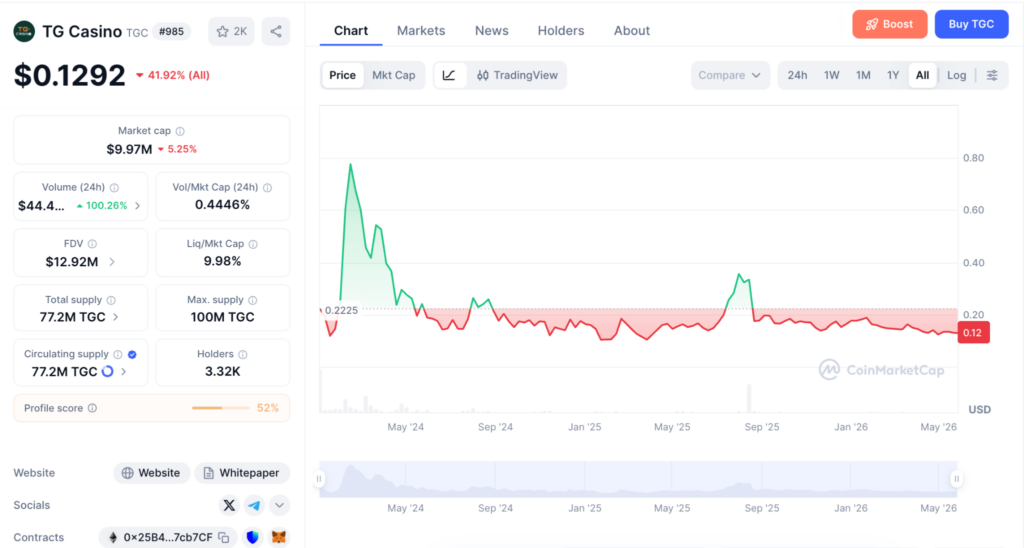
Essentially, this is a typical product of the new wave of Telegram casinos: easy entry through a bot, with its own TGC token layered on top. In the beginning, it was a pure presale story with aggressive promos and promises of sky‑high APYs to quickly attract liquidity for launch.
The tokenomics of TGC look like a textbook example of classic GameFi: a capped supply of 100 million tokens, a presale, allocated portions for liquidity, user rewards for participating in contests, and staking. Part of the supply is reserved for rewards and activity incentives — you play in the casino, join promotions, and earn TGC.
In practice, TGC lives off the influx of new players into the Telegram casino and the interest of speculators; without a sustainable revenue stream and strict emission discipline, any such token risks turning into an endless giveaway machine just to keep attention. In this setup, it makes more sense to treat TGC as a purely speculative asset tightly tied to the hype around Telegram bots, rather than a long‑term investment.
At the moment, the project does little to support meaningful token activity, there is limited liquidity around TGC, and there is no strong, engaged community ready to back it. This token is unlikely to work as an investment asset, but the case itself is quite interesting.
How to Actually Evaluate These Tokens Before Buying
Before purchasing any casino-related token, take a look at the numbers first. It is essential to know what percentage of platform revenues goes to token holders and whether it is something other than just “part of profit.”
Examine the project’s tokenomics: including the number of tokens issued and in circulation, inflation, etc. If the whitepaper mentions buy-and-burn mechanisms, check them out on the blockchain.
Distinguish two aspects of the token: utility on the platform level (rebates, statuses, access to different game modes), and investment value as an asset. The same token may turn out to be a good helper for an active gamer, while also being a bad investment.
And finally, everything will depend on volume: without increasing traffic and casino activity, any tokenomics becomes useless anyway.
The Bottom Line on Casino Tokens
Ideal casino tokens should also have a solid token economics system with fee-capturing options, clear buyback/burning processes, practical use through rebates, statuses, and user access, and clearly defined issuance without constant inflation.
Every attempt at purely marketing-driven actions, share dilution, and a perpetual “giving away bonuses” approach with a printing-press mentality will, sooner or later, ruin any token’s price.
The casino tokens should not be considered the main asset in your portfolio because they are extremely high-risk and depend solely on a single product. Better consider them as a speculative addition to your investments, 3-5%, not 50-80% of your capital.