Not your keys, not your wallet. This phrase has been thrown around a lot online, especially by CEOs of large crypto projects, and it’s true. As soon as you transfer digital assets to an exchange, the funds technically no longer belong to you.
Why is this? It’s simple: they can request verification of your funds, block them, and then be hacked themselves (as happened, for example, with ByBit). Then you won’t be able to withdraw them, simply because you don’t have the private keys to your exchange wallet.
By 2026, the market finally began to realize that it’s necessary to return to cold storage, not just keep all your funds on the exchange, or at least diversify them.
So, if you’ve decided to do the smart thing and transfer some of your funds to a cold wallet, but don’t yet know how to do it correctly, this review is just for you! We’ll look at seven wallets from different categories: hardware, software, and multi-chain. The idea is simple: explain what each one is good at, what it’s bad at, and who it’s really for.
Hardware vs software: the first decision
Before deciding which wallet to use, you need to understand whether you primarily store long-term assets or actively trade and move funds.
Hardware wallets store your private keys on a physical device that isn’t sitting in your browser all day and isn’t constantly connected to the internet (offline). This makes them a better option for long-term storage and is more secure. However, there is a drawback: you need to physically confirm transactions, and you can’t make ten trades in a minute.
Software wallets reside on your phone or laptop. The keys are encrypted and stored on your device, but the wallet is constantly connected to the internet. This creates a larger attack surface, but it is much more convenient if you actually use your cryptocurrency regularly.
For most people, a combination is a reasonable solution: a hardware wallet for anything that could be dangerous to lose (essential assets), and a software wallet for crypto (funds you regularly use), such as rent and everyday expenses. But this is a personal decision.
1. Ledger Nano X/Nano S Plus
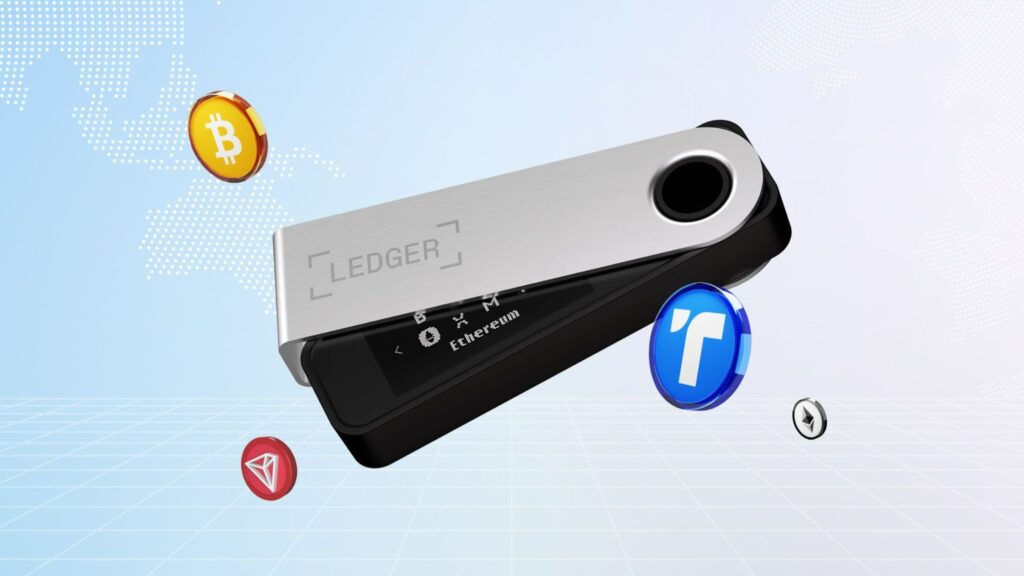
Ledger remains the name most people think of when they think of a “hardware wallet,” even after the Recover feature scandal in 2023. This feature led many to realize that Ledger, at least in theory, could access key content, contradicting the established model of hardware wallets. The backlash was well-deserved, and the Recover option has since become optional.
Along with the wallet, you install Ledger Live, a user-friendly client that tracks your portfolio, lets you stake, exchange funds, create new wallets, and generally manage your wallet. The interface is quite intuitive, and if you’re a beginner, the setup will only take 20-30 minutes.
Ledger supports almost everything you’re likely to work with: Bitcoin, Ethereum, Solana, Polygon, Tron, and thousands of other coins. Price: The Nano S Plus will cost around $79, while the Nano X costs around $149 and primarily adds Bluetooth and a bit more convenience, especially if you want to use your phone instead of a laptop. For greater mobility, I recommend the latter option; it will save you a ton of time.
Who it’s for: Anyone with significant cryptocurrency assets who doesn’t need to be online 24/7. For most people, the S Plus is sufficient. If using your phone with your device and not having to carry cables is important to you, the X is definitely worth the price.
2. Trezor Model T/Safe 3
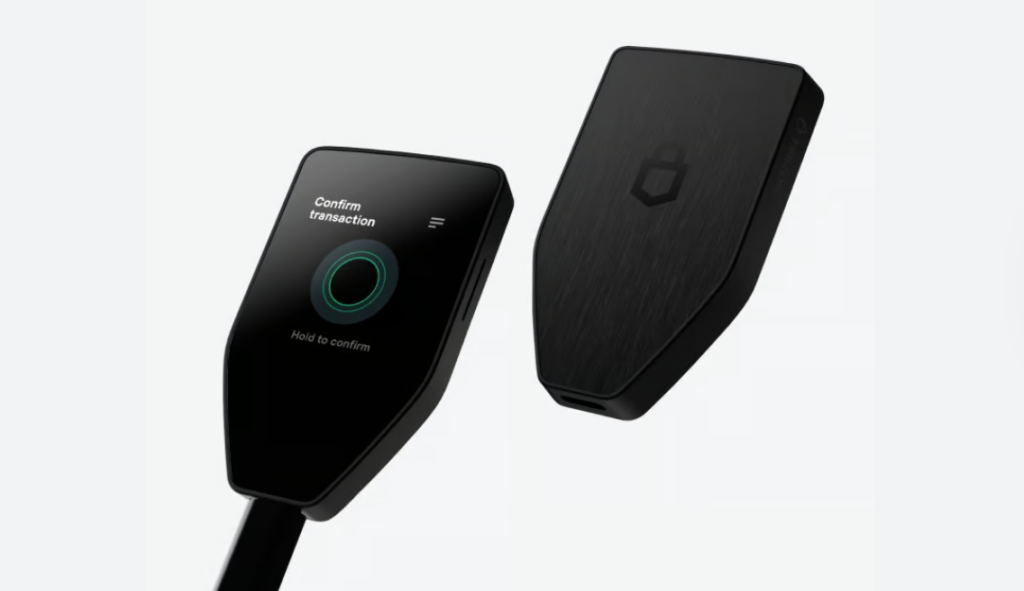
Another leading cryptocurrency wallet provider is Trezor, which can be considered Ledger’s chief rival. The primary difference between Ledger and Trezor lies in the latter’s firmware, which is entirely open source, enabling the community or independent auditors to examine how your device works, unlike the “black box” Ledger offers.
If you desire full transparency concerning the protection of your digital assets, then Trezor should be your pick.
Moreover, Trezor features an application interface called the user experience client, or Trezor Suite. Although Trezor Suite isn’t quite as user-friendly as Ledger Live, it is still straightforward and the easiest to configure among other applications. As for the wallet, you may choose either the cheaper Safe 3 with buttons or the Model T with a touchscreen display.
In terms of blockchain support, Trezor supports all major blockchains, including Bitcoin, Ethereum, and EVM-compatible chains, among others. Ledger remains superior for transaction volume and obscure cryptocurrencies; however, Trezor is ideal for a “usual” portfolio.
Price: Safe 3 is about $79, while Model T is around $179. The same reasoning holds true for Ledger. Once again, you should think about portability and choose the latter product.
Target audience: People who care about security and transparency, people who prefer open-source software and do not like proprietary secure elements that cannot be verified. Trezor and Ledger are among the most tried-and-tested cryptocurrency wallets.
3. MetaMask Hot Wallet
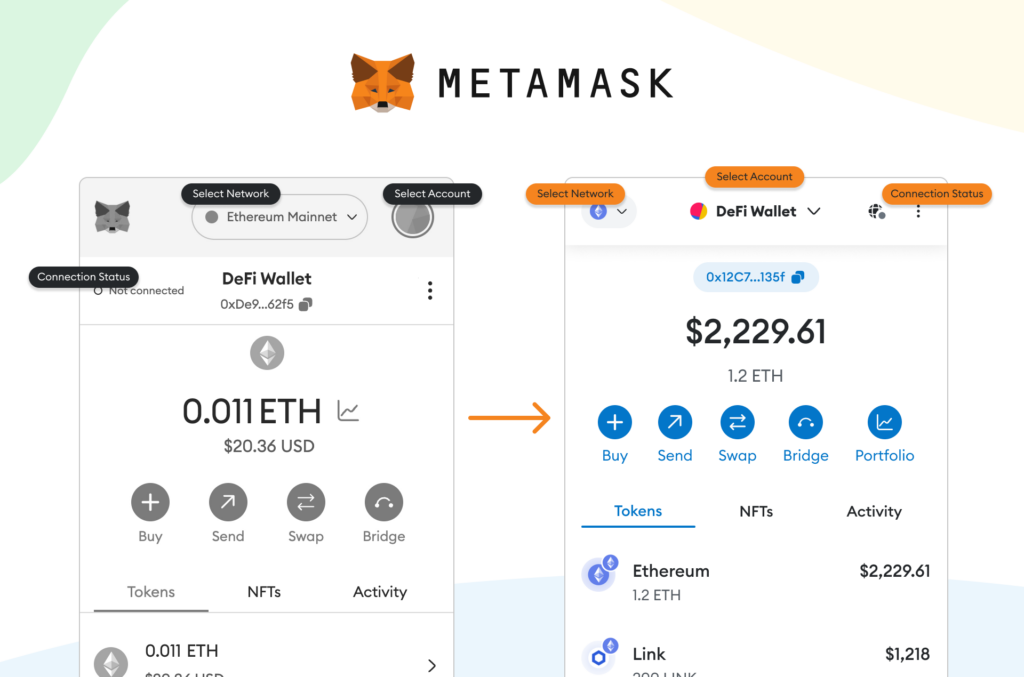
MetaMask is essentially a classic wallet for most DeFi projects, especially if you work with Ethereum, Arbitrum, Optimism, Polygon, Base, or any other EVM-based blockchain platform.
The wallet is available as a browser extension and mobile app. Nearly 90 percent of crypto projects support MetaMask in some way, and it has one of the largest market shares.
In terms of security, it’s still just a “hot” software wallet. Your keys are stored locally, but the environment they reside in (your browser, your PC, your phone) isn’t completely isolated. I recommend using this wallet for small amounts, or in conjunction with a hardware “cold” wallet.
MetaMask is essentially free; the company itself makes money from exchanges within the wallet, receiving a small additional commission.
Who this is for: Anyone doing anything on Ethereum and the EVM: DeFi farming, NFT creation, yield gambling, prediction markets like Polymarket on Polygon, etc.
4. Phantom Hot Wallet
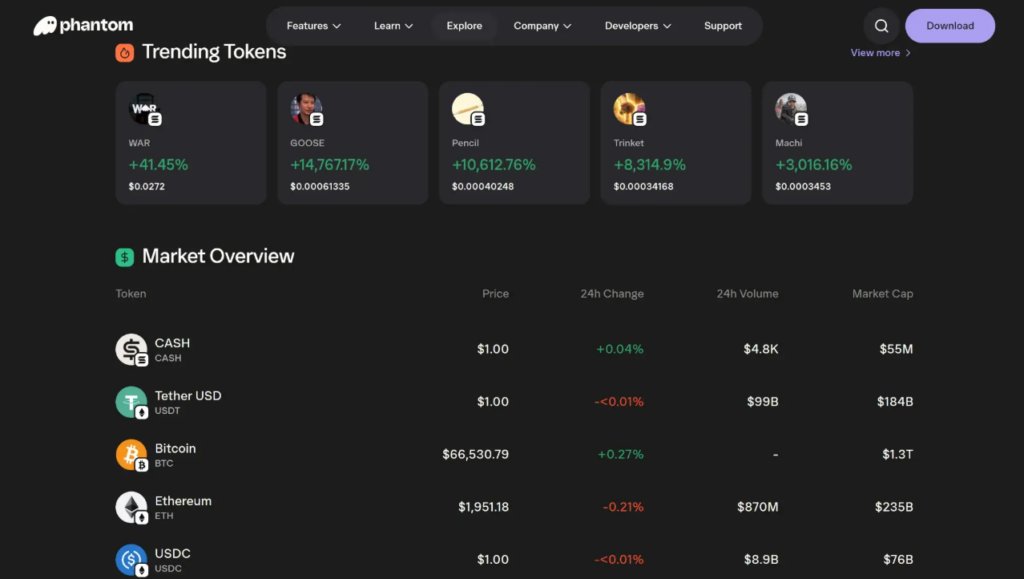
Phantom did for Solana what MetaMask did for Ethereum. Essentially, it became a wallet for the entire ecosystem, and then grew to support Ethereum and Bitcoin, making it a full-fledged multi-chain wallet, not just a “Solana wallet.”
Phantom’s main advantage is its ease of use: fast, intuitive, and not like a developer tool. Even if you’re a beginner, you can figure out the settings in less than ten minutes. There’s a mobile app with built-in core ecosystem features.
Out of the box, Phantom supports Solana as the main chain, as well as Ethereum and other EVM chains, and native Bitcoin. So, if your world is “SOL + a little EVM + a little BTC,” Phantom can become your primary wallet.
It’s free to use. Like others, they make money from in-app exchanges.
Who it’s for: Anyone who actively uses Solana. If you’re working with Solana DeFi, NFTs, memecoins, or anything else happening in the ecosystem, Phantom is becoming practically indispensable. As a bonus, it’s becoming a viable primary wallet for users of multi-chain platforms who value user experience over access to 10 million little-known tokens.
5. Rabby Hot Wallet
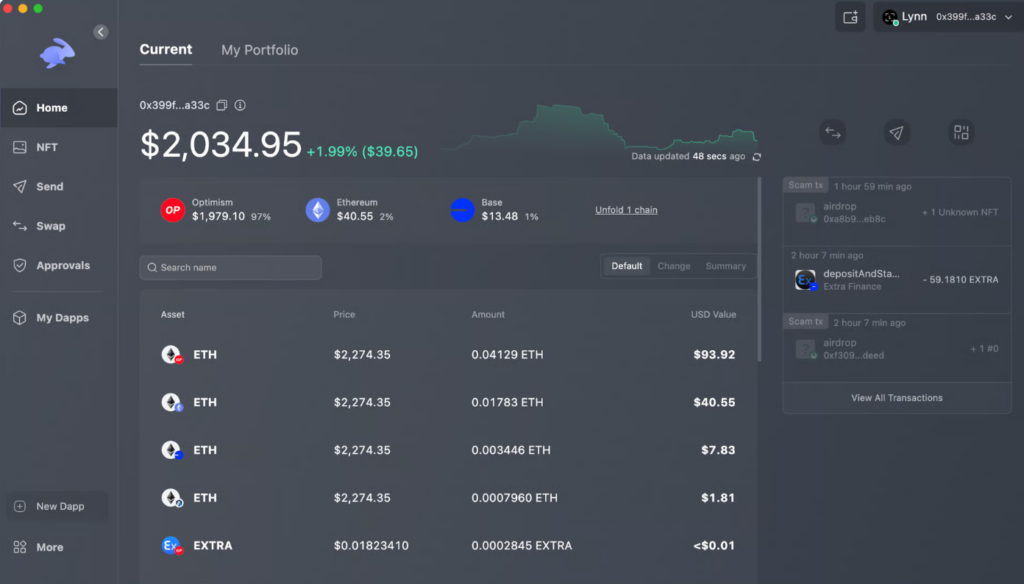
Rabby Wallet is essentially a copycat of MetaMask, but with elements of decentralization (more so than MetaMask) and expanded DeFi functionality.
Created by the DeBank team, Rabby has one amazing feature: transaction simulation. Before you sign anything, it shows you exactly what will happen to your balance: which tokens will be sent, which will arrive, and what the final effect will be. If a malicious contract tries to empty your wallet under the guise of a harmless approval, Rabby will significantly simplify the task of detecting such an opportunity.
It also automatically selects the correct network for any dApp you use, which sounds insignificant, but ultimately saves a surprising amount of time and hassle. No more constantly manually switching between chains because you forgot you’re still on Arbitrum.
Because it displays more information, Rabby may seem a little more complex for beginners. But if you’re already working with multi-chain DeFi ecosystems, things will be much easier for you.
Who it’s for: Active DeFi users on EVM blockchains, especially those who regularly interact with new, untested, or experimental protocols. If you’re tired of horror stories about people losing money due to “one bad signature,” Rabby is essentially a good alternative to MetaMask.
6. Trust Wallet
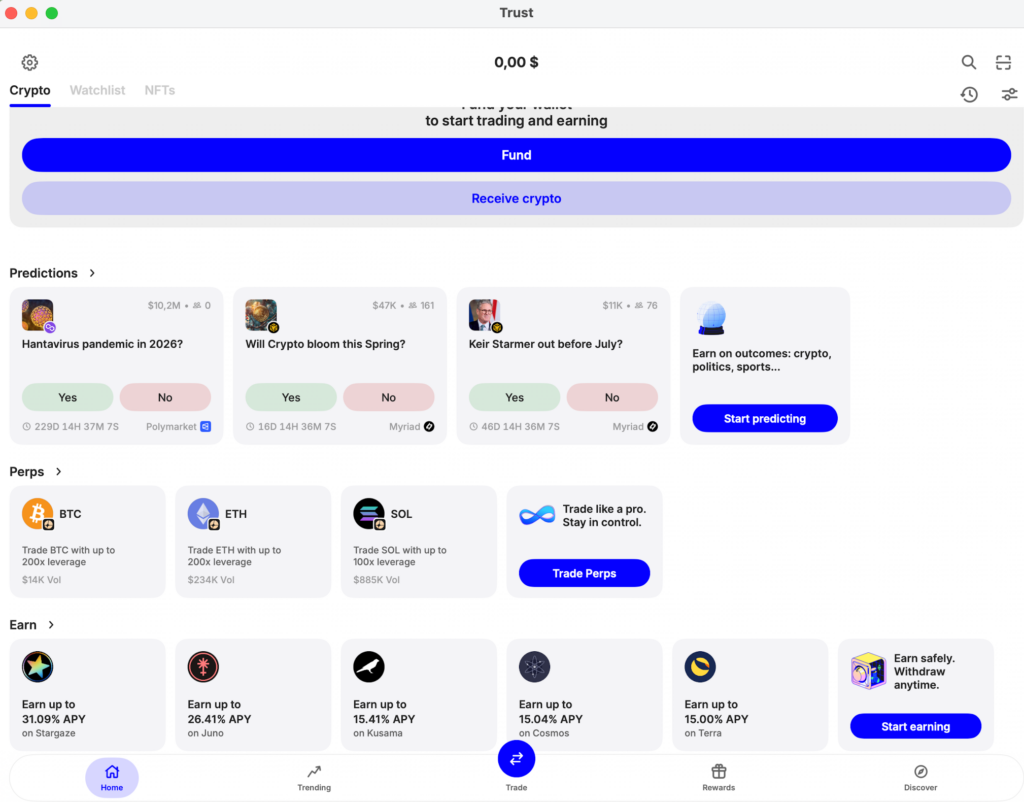
Trust Wallet is a mobile wallet firmly integrated with the Binance ecosystem; not only is the development team part of the company structure, but the platform also operates within it. In short, this is their official wallet, and what this means is clear.
The product has a high number of installs and supports a wide variety of coins and blockchains. The benefit for the user is self-explanatory: one app for your smartphone that works almost everywhere.
The app has an attractive, understandable interface, is quick to set up, and includes a dApp browser and full NFT support. If you want to work with cryptocurrency through your smartphone without diving too much into tech settings, this one is for you.
Firstly, however, we must emphasize that the service is not a custody service, which means that your private keys will be stored on your side, not by the provider. Yet, the brand and its ownership matter, so if the issue of your data and the privacy thereof is particularly dear to you, you should take that into account.
As for the blockchain networks supported, the wallet offers one of the most extensive selections on the market. Namely, you can access more than 100 blockchain networks and over a million different types of assets on them, making it a good place to buy rare tokens on obscure networks because it’s highly probable that the people at Trust Wallet will know about them first!
Another feature of the service worth mentioning is that it is practically free. The only thing you will have to pay for is using the network, making an exchange in the app, paying for some cryptocurrencies using your bank card, etc.
7. Exodus
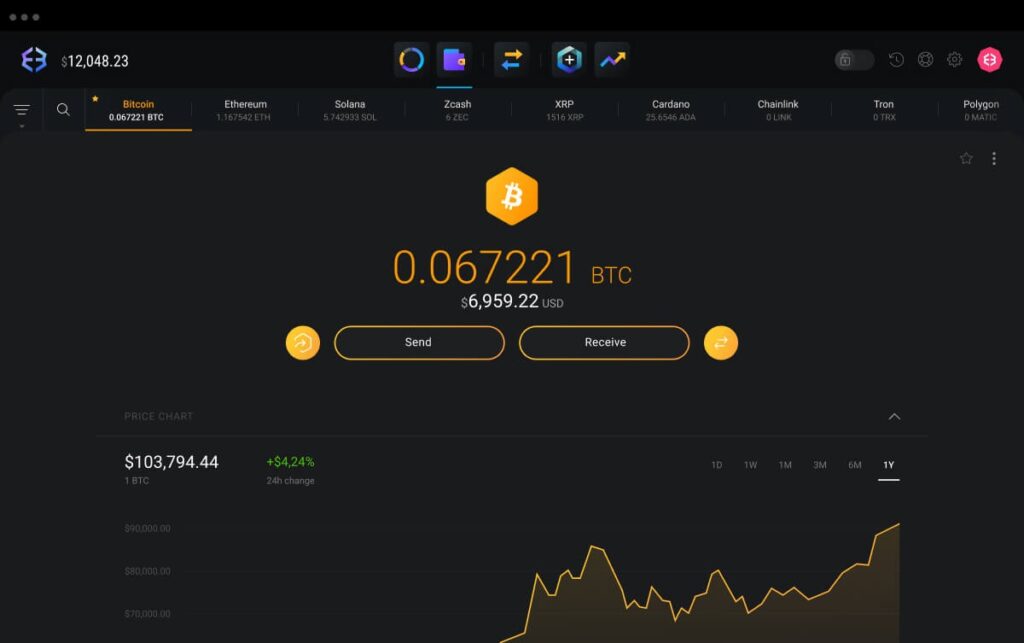
Exodus is an extremely visual wallet designed with the end user in mind and provides non-technical users with confidence. In addition, it is also one of the oldest wallets out there, with proven reliability.
Among the strengths, you will find a portfolio summary, an intuitive desktop application, an intuitive mobile application, and built-in trading features that let you trade assets without leaving the wallet. It was clearly designed to simplify the first steps of using self-custody.
Unfortunately, it is a closed-source wallet, unlike MetaMask or Trezor. It supports hundreds of assets on leading blockchains, which is enough for daily use.
It is, as with all other wallets, a freemium wallet where swaps are paid for within, usually at a price marginally higher than the average market rate, amounting to about 1-2%.
For newbies interested in an up-to-date, stylish design, or anyone with a somewhat basic portfolio of assets who would like everything represented in one convenient place.
Note: There have been recent instances of fake USDT tokens that appeared legitimate on the app’s interface. They could be just custom-made tokens bearing the same names and logos but not associated with any stablecoin whatsoever. Before initiating any transactions, it would help if you looked up the contract on a blockchain explorer and compared it with the original USDT contract on the relevant network.
A quick guide to choosing a crypto wallet
Need cold storage for large amounts?
- Choose a hardware wallet: Ledger Nano S Plus / X or Trezor Safe 3 / Model T.
Do you frequently use Ethereum / EVM DeFi and make small exchanges?
- You basically need MetaMask. If you’re a more advanced user and want protection from dubious contracts, try Rabby.
Deeply immersed in Solana and occasionally still in EVM + BTC?
- Phantom is your choice.
Do you primarily use mobile devices, and the BSC network often has many blockchains and random tokens?
- Trust Wallet or Exodus are reliable and simple options.
Use this to determine which wallet best suits your needs for trading/investing or just storing digital assets.
Conclusion
The importance of using wallets should not be underestimated, but what you do with them is even more important. Never give your seed phrase away – neither to customer support, nor to “official representatives,” nor to “recovery” services – because any demand for your seed phrase means robbery of your money. Keep your seed away from the Internet (on paper or store in different places), without taking snapshots of it, and without keeping it on phones, in the cloud, or in emails. For sums you wouldn’t like to part with, it’s better to use a hardware wallet rather than a browser extension.
However, technical mistakes can be costly as well, which means you should have at least some discipline. You should always verify the beginning and ending of addresses before sending to prevent malicious code from replacing them in the clipboard. Try out a new or bigger operation by sending small sums beforehand. It’s much cheaper than risking losing your entire stash.