Today, a “whale” is a player who deposits large sums into a casino; they are assigned a personal manager and receive various bonuses.
But if we look back at how it was, for example, in Ancient Rome, this role was played by emperors. They could lose a fortune equal to the annual income of a noble family in one evening, and then continue the next day as if nothing had happened. For them, gambling wasn’t just entertainment; it became another realm of power, where the rules applied only as long as they satisfied the most powerful person in the state.
Some emperors studied dice and wrote treatises on it. Others played for hours, placed huge bets, or outright cheated. Some paid for the losses of their confidants, while others turned the game into a way to replenish their own treasury.
That’s why the history of ancient gambling isn’t a collection of amusing anecdotes about rulers, but a story of money, dependence, and power that allowed one player to control not only the table but everyone seated at it.
In our new article, we’ll explore how this happened in Ancient Rome and the underlying rationale.
Gambling Was Illegal in Rome. Nobody Cared
To understand the provocative behavior of the Roman emperors, it’s first necessary to understand the law. Formally, gambling for money was prohibited in Rome.
Bets were permitted only on competitions whose outcome depended on the skill of the participants: chariot racing, running, wrestling, and fistfights. Dice were not included in this category. Debts incurred at the gaming table could not be collected through the courts, and the owner of an establishment who organized illegal gambling faced a fine.
The exception was Saturnalia, an ancient Roman winter festival in honor of the god Saturn, which was accompanied by the abolition of laws, the temporary abolition of slavery, and general rejoicing. It was usually celebrated from December 17th to 23rd. During the December festival, normal order was suspended for several days: slaves could sit at the same table with their masters, social conventions relaxed, and dice games transformed from a forbidden pastime into part of the general festivities.
However, even during the rest of the era, the ban existed mainly on paper. Dice, gaming boards, and inscriptions left by patrons have been found in Pompeii taverns. One of them preserved the scene of a quarrel between gamblers: the game ended in a fight, after which the owner threw both out into the street. Gambling was such a familiar part of everyday life that people recorded it directly on the walls.
But the law became especially arbitrary in palaces. The emperors, in whose name order was maintained in the state, themselves gambled openly, extensively, and for high stakes. The ban drove dice out of public spaces and into taverns and private homes, but no one considered it necessary to hide behind the doors of the imperial palace.
Augustus: The Founding Father Who Comped His Guests
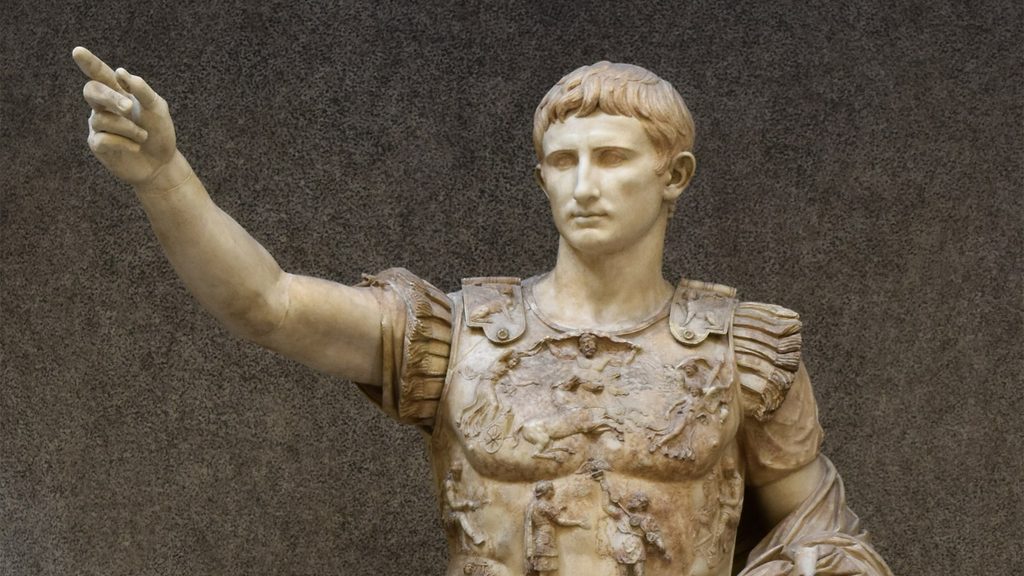
Augustus, the first emperor, a man who for decades projected an image of stern republican virtue, was also an utterly uncompromising gambler. We know this because he himself admitted it.
In the surviving letters of Suetonius, Augustus joyfully recounts to his stepson Tiberius that he spent the entire holiday gambling “like old men, from dinner until the very end.” In another letter, he describes losing twenty thousand sesterces in a single sitting, roughly twenty years’ worth of a legionary’s salary, and calls it generosity, since he allowed his fellow gamblers to win.
Even more revealing was his habit of betting on his guests. Before the game, Augustus would hand each of his dinner companions a handful of silver so they could play without risking their own money. Any modern casino owner would instantly recognize this as a bonus system. Free chips for the table, because in reality, the “big player” is buying the game itself, the atmosphere, the action, the company. Money is merely the price of admission to this pleasure.
When critics whispered about the emperor’s habit of gambling, Augustus made no secret of it; he tried to act like a gracious host whose only vice was friendly gambling. A controlled but visible vice makes a ruler more attractive, and no one in history understood this art better.
Claudius: The Emperor Who Wrote a Strategy Book
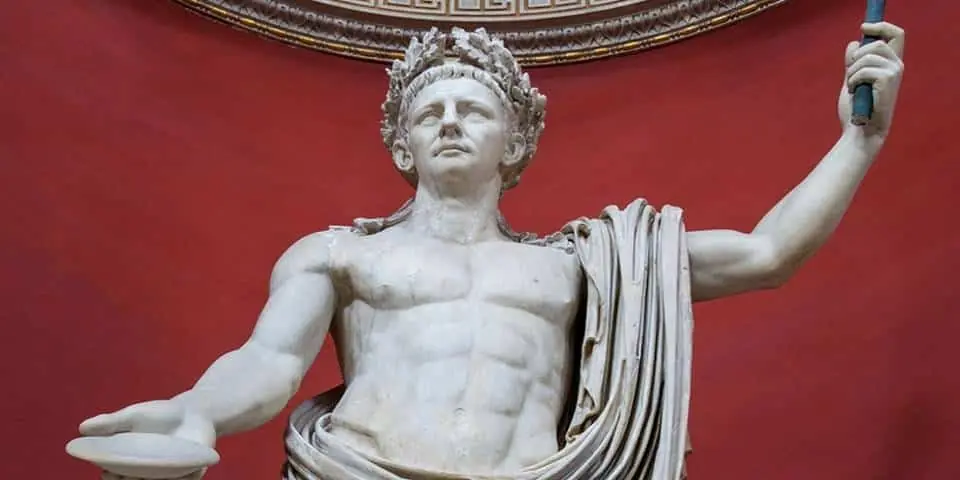
While Augustus regarded dice as a pleasant accompaniment to a feast, for Claudius the game became a true passion. He didn’t limit himself to rare games with guests; according to contemporaries, he played at every opportunity.
This passion clearly revealed Claudius’s character. The emperor, who reigned from 41 to 54 CE, was not only a politician but also an extremely prolific scholar. He wrote dozens of books on the history of Rome, works on the Etruscans, eight volumes on Carthage, an autobiography, and even proposed adding new letters to the Latin alphabet. Therefore, he approached dice more than just an amateur. Claudius wrote a separate book about it, likely describing the rules, combinations, and playing techniques.
The text has not survived, so we do not know whether the emperor was trying to develop a winning strategy or simply codify his favorite game. But the fact itself is telling: Claudius wasn’t content with throwing dice; he needed to study the game and turn his own passion into a subject of study. Suetonius lists his historical works and specifically mentions a book on dice.
Even more telling was his habit of playing on the road. According to Suetonius, a specially fixed gaming board was installed in Claudius’s carriage to prevent the jolting of the carriage from interrupting the game. Roman roads were good by ancient standards, but the carriage ride was still long and bumpy. A normal gambler would have waited for a stop, but Claudius chose to redesign the vehicle.
This no longer seems like a casual diversion while traveling. The emperor needed to be able to continue playing regardless of whether he was in the palace or traveling on state business. For a man who ruled a vast empire, dice were so important that the imperial carriage was redesigned to accommodate them. This is precisely how Suetonius conveys this detail in his biography of Claudius.
His passion wasn’t limited to dice. Claudius loved public games and staged them on a remarkable scale: chariot races, animal baiting, gladiatorial combat, and mock battles. In the arena, he abandoned his aloof ruler demeanor. He talked to the crowd, joked, shouted out remarks, and counted aloud the gold coins paid to the victors. Sometimes he remained seated even after the rest of the spectators had been dismissed for dinner. Suetonius clearly disliked Claudius and could exaggerate, but the image he created is consistent: we see a man who didn’t simply observe the game, but was completely immersed in it.
The best testimony to Claudius’s reputation is a posthumous satire, traditionally attributed to Seneca. Instead of the expected transformation of the emperor into a god, its author sends Claudius to the underworld. There, a special punishment is devised for him: he must forever roll dice from a bottomless cup. Claudius gathers them and prepares to throw, but the dice spill out onto the ground again. The game never begins, and the desire to play never fades. This episode is preserved in “The Pumpkinization of the Divine Claudius.”
This punishment was not chosen at random. The satire worked because the Roman public immediately understood the allusion. Claudius’s fascination with dice was so well-known that it became a key feature of his posthumous image.
Caligula: Tilt, Cheating, and the House Edge of Absolute Power
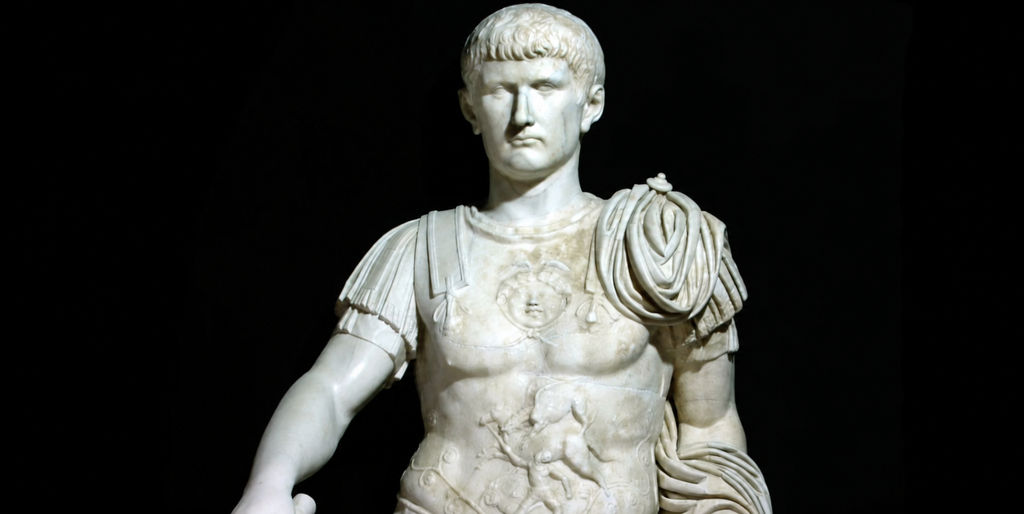
Suetonius describes Caligula not only as a gambler but also as a sharper. According to him, the emperor resorted to lies and even false oaths during games. He viewed a loss not as a result of the game, but as an injustice that needed to be immediately corrected, preferably at someone else’s expense.
One day, Caligula gave up his place at the table to another player and went out into the courtyard. There, he noticed two wealthy members of the equestrian class. Caligula ordered both of them arrested and their property confiscated. He then returned to the game and declared that he had never had such luck. Suetonius recounts this story in Chapter 41 of his biography of Caligula.
Cassius Dio preserved an even more sinister version of the same story. While traveling through Gaul, Caligula allegedly ran out of money right in the middle of a game. He then demanded a list of the local inhabitants, selected the richest among them, and ordered their execution for their property. After this, the emperor returned to the table and boasted that the others were gambling for a few denarii, while he had just won 150 million sesterces. The story is contained in Book 59 of Dio Cassius’s Roman History.
Caution should be exercised when taking these episodes literally. Suetonius wrote decades after Caligula’s death, and Dio Cassius wrote almost two centuries later. Both worked within the tradition that portrayed the murdered emperor as a mad tyrant. But it is significant that the two authors independently link his gambling with the confiscations.
Caligula’s financial problems did indeed arise quite quickly. Ancient authors differ on the figures, but agree on the main point: the enormous reserves left by Tiberius were squandered in the first years of his new reign. Suetonius cites 2.7 billion sesterces and claims that this sum disappeared in less than a year. Dio Cassius cites estimates ranging from 2.3 to 3.3 billion and writes that by the third year of his reign, nothing remained of the savings. The money was spent not only on gambling, but also on giveaways, luxurious ships, palaces, public spectacles, gladiators, actors, and the upkeep of the army.
When the reserves ran out, the regime turned to new sources of income. There were charges against wealthy citizens, forced auctions, and attempts to revoke wills that did not mention the emperor. Caligula then introduced new taxes: on food sales, lawsuits, the wages of porters, and the earnings of prostitutes. The tax regulations were placed in a difficult-to-read location and written in such small print that citizens could break the law without even knowing its contents and then be fined.
Caligula reigned for less than four years. In January 41, he was assassinated by conspirators, including Praetorian Guard officers Cassius Chaerea and Cornelius Sabinus. Of course, the murder wasn’t caused by dice losses per se. Gambling was just part of a much more dangerous system, built by the unfortunate emperor himself.
Nero: The Whale Who Bought the Whole Casino
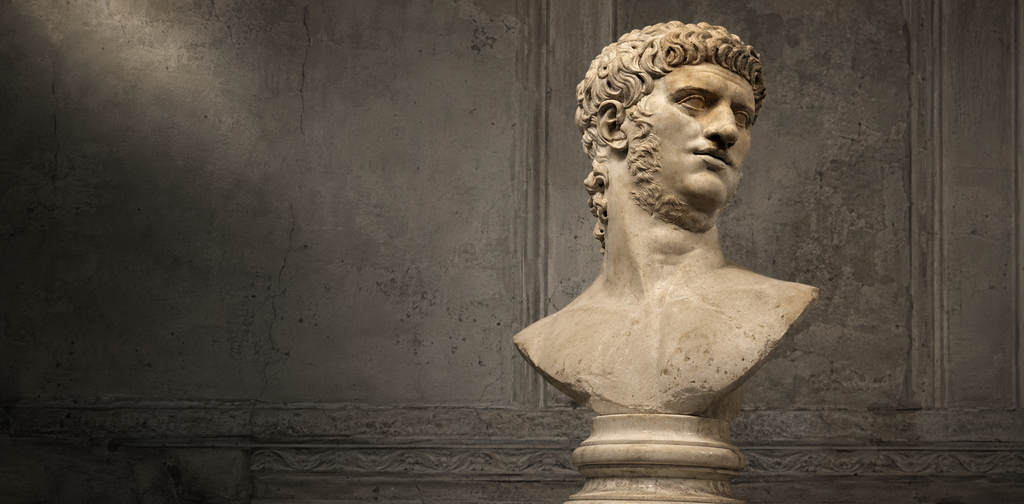
If we were to choose the greatest high roller among Roman emperors, it would be Nero. Not only did he wager enormous sums, but he also participated in competitions in which no one would dare to condemn him to defeat.
Suetonius claims that Nero played dice for 400,000 sesterces for each point he scored. A typical legionary at the time received around 900 sesterces per year. This means that one unit of the emperor’s bet was equivalent to more than four centuries of military service. Even if the ancient author exaggerated the amount, the scale of his passion is clear.
But Nero loved chariot racing even more than dice. He had been fascinated by it since childhood, discussing the drivers of the “green” team with his comrades, and once he became emperor, he would daily compete in races with miniature ivory chariots. Soon, being a spectator became unsatisfactory for him. Nero began training in the imperial gardens, and then personally appeared in the arena of the Circus Maximus.
The culmination of his career was a trip to Greece in 66–67. By order of Nero, the major games, usually held in different years, were combined into a single season. At Olympia, he entered a race with a team of ten horses, fell from his chariot, and did not finish the race. He was still declared the winner. Cassius Dio writes that after this, the Olympic judges received a million sesterces from the emperor.
During his Greek tour, Nero performed as a charioteer, singer, musician, and actor. Ancient tradition attributes 1,808 prize wreaths to him. The exact number may have been exaggerated, but the principle remained unchanged: the emperor won every competition. The judges received money and Roman citizenship, and Nero exempted the province of Achaea from taxes.
Such generosity came at a high cost to the treasury. When funds became scarce, Nero resorted to confiscations, the revision of inheritances, and forced levies. Temples were stripped of their valuables, gold and silver statues were melted down, and payments to soldiers and veterans were delayed.
In 68, Nero was abandoned by his Praetorian Guard, after which he committed suicide.
Why Emperors Gambled: The Psychology Hasn’t Changed
Partly, it was a matter of honesty: emperors lived in a bubble of flattery, every senator laughed at their jokes, every general praised their strategy. For people whose reality was distorted by power, chance was perhaps the last place where results were real. Billionaires say the same about markets and poker: it’s the only remaining place where money yields a fair answer.
Gambling also served a social function. When Augustus handed out money to guests and invited them to the table, the winnings weren’t the main thing. Gambling created a space in which a courtier could defeat the emperor without challenging him politically.
The paradox was that Roman rulers sought honest risks but had little tolerance for their consequences. Caligula cheated and covered his losses with confiscations. Nero participated in competitions where the judges couldn’t allow him to lose, and so on.
They weren’t looking for risk itself, but for the thrill of it: competition without the real possibility of defeat. In this sense, little has changed in two thousand years. The most powerful players in any game strive to gain an advantage: access to information, the right to break the rules, or the ability to rewrite them to suit themselves. Only the tools change. The desire to experience the thrill while maintaining control remains the same.